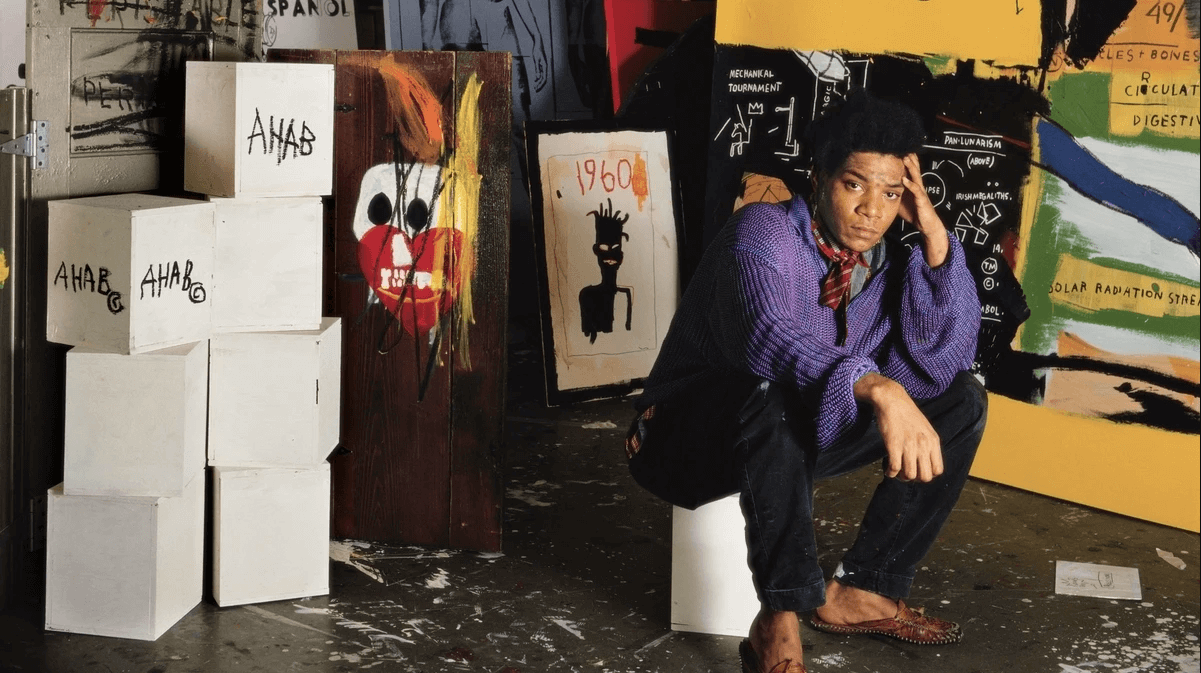
Jean-Michel Basquiat is one of the most fascinating and influential artists of the late 20th century. Born in 1960 in Brooklyn, he rose from a young graffiti artist to an international art phenomenon in just a few years. His raw energy, expressive lines, and fearless commentary transformed the art world and turned him into a legend long before his untimely death at age 27.
Despite his short life, Basquiat left behind a powerful legacy that continues to inspire artists, designers, musicians, and collectors around the world.
From Street Walls to Major Museums
Basquiat’s journey began on the streets of Manhattan under the pseudonym SAMO, where he left cryptic and provocative messages that instantly attracted attention. His graffiti wasn’t just visual—it was poetic, ironic, and socially charged.
His originality quickly caught the eye of the New York art scene, and within a short time he was exhibiting alongside major contemporary artists. Yet, despite entering the world of high art, Basquiat never abandoned the raw, urban spirit that defined him.
A Style Unlike Any Other
Basquiat’s art is a fusion of symbolism, language, color, and emotion. His paintings are chaotic at first glance, but deeply intentional beneath the surface.
His works frequently include:
- crowns, representing power, dignity, and self-worth,
- fragmented words, names, and poetic phrases,
- anatomical drawings and skeletal figures,
- references to African heritage and historical figures,
- expressive brushstrokes and layered textures,
- social and political commentary.
The result is a visual rhythm that feels almost musical—fast, intense, and unapologetically honest.
The Legendary Collaboration with Andy Warhol
One of the most iconic artistic relationships of the 20th century was the collaboration between Basquiat and Andy Warhol.
Warhol admired Basquiat’s raw talent and emotional depth, while Basquiat found inspiration in Warhol’s structured, pop-art aesthetic.
Their joint artworks represent the meeting of two very different worlds: industrial pop culture and urban expressionism. Together, they created a visual dialogue that remains historic.
Recurring Themes in Basquiat’s Work
1. Identity and African Roots
Basquiat honored his Haitian and Puerto Rican heritage by celebrating Black heroes, musicians, athletes, and cultural symbols.
2. Social Justice
His works openly confront racism, inequality, police violence, and the struggles of marginalized communities.
3. Music as Inspiration
A lover of jazz and early hip-hop, Basquiat infused rhythm and movement into his compositions, giving his art a musical heartbeat.
Why Basquiat Still Resonates Today
- Authenticity and emotional depth
- Bold, modern aesthetics perfect for contemporary spaces
- Symbolic layers that invite reflection
- Urban energy and cultural relevance
- A life story that shaped his legend
His artworks bring intensity, vibrancy, and personality into any interior, from minimalist homes to creative studios.